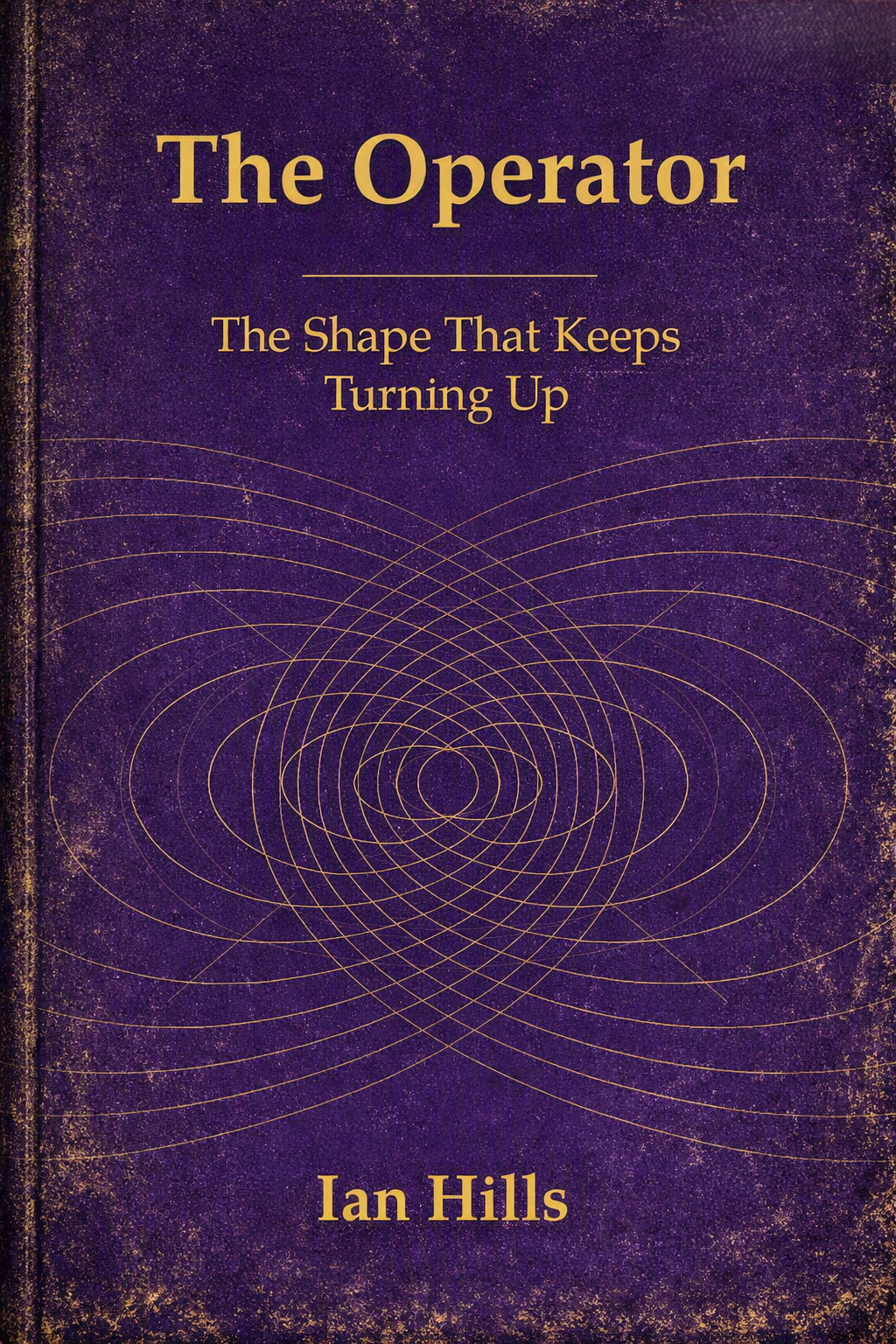
Operator Q treats time as a physical rate, a measurable gradient that shapes how geometry behaves, and when that rate is combined with its scaling invariant toroidal structure you get a unified framework that speaks cleanly across quantum, relativistic and cosmological domains. It shows why so many anomalies in physics cluster around the same structural questions of rate, coherence and organisation, and why the universe repeats its behaviour across scale in ways that matter. Operator Q is now the foundation for the two part science fiction trilogy and the wider franchise built on this geometry, where the same rate rooted structure that governs physics becomes the engine of the story world.
The Cradle of Time is the bridge between storms, stars, matter, life and the quiet geometry of the vacuum. It begins in a back garden in a thunderstorm and follows four behaviours - curvature, rotation, boundary and rate - through everything the universe permits. A hailstone’s rings, Jupiter’s spot, the way glass flows, the way nerves fire, the weight of empty space and the edge of the map all turn out to be the same story told at different scales.
Something in the dark has learned to listen back.
It was not a void. It was intention.
In 2396, eleven seconds of coherent gradient assemble in the deep field past the last marker, and one watchstander at a lane console reads it live and writes it down. Four reviews close the file as a calibration transient. His civilisation has spent three centuries learning a single discipline: record carefully, decline to interpret. He keeps the entry open on a second screen, and the field keeps its word, until the morning it does not.
By 2399 humanity lives on grown worlds in the quietest peace its history records: cities that sense their people, a military kept as a courtesy, death available by request. On one November day in Winchester, seven people notice four seconds of nothing. A watchstander on the Sol ring logs it. A lane administrator keeps the question open. A mediator hears a child testify that peace did not work. A singer at the choral well feels the hour fill fuller than the well can make it. A survey Captain stands at a rail and does not turn. An empath on a bridge listens outward, and something listens back. When a presence enters the mapped field and a Bronze Age world under observation burns beneath it, the fence humanity never knew it lived inside comes down, and the Council that kept it, ancient, procedural, and not gentle, sends for the species. This is the year in which attention replaces silence. The fence around Earth’s sky opens, and three people are sent through the gate: a ceremonial soldier to keep, a trainee empath to speak, a market trader to trade, with nothing behind them but the ground.
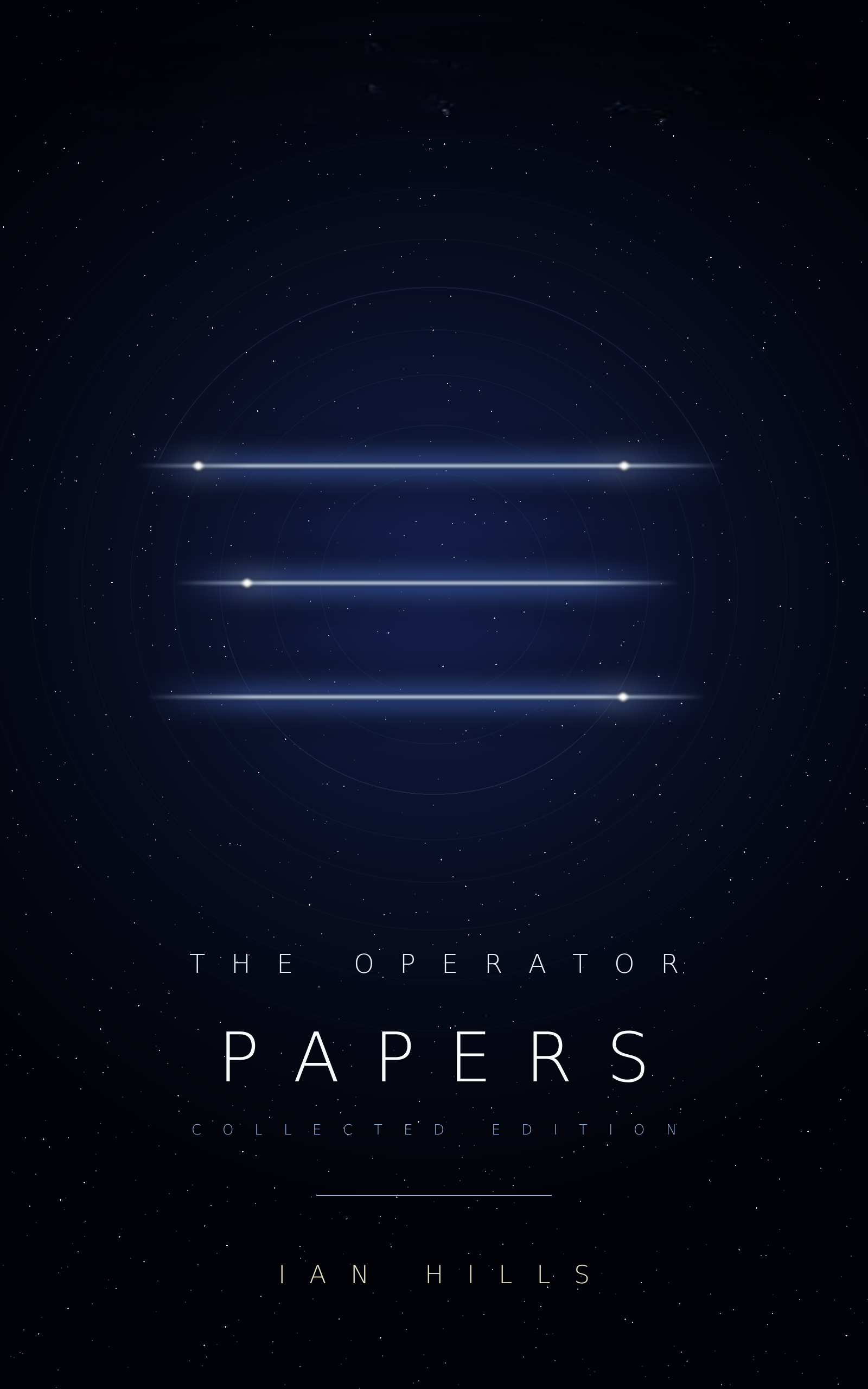
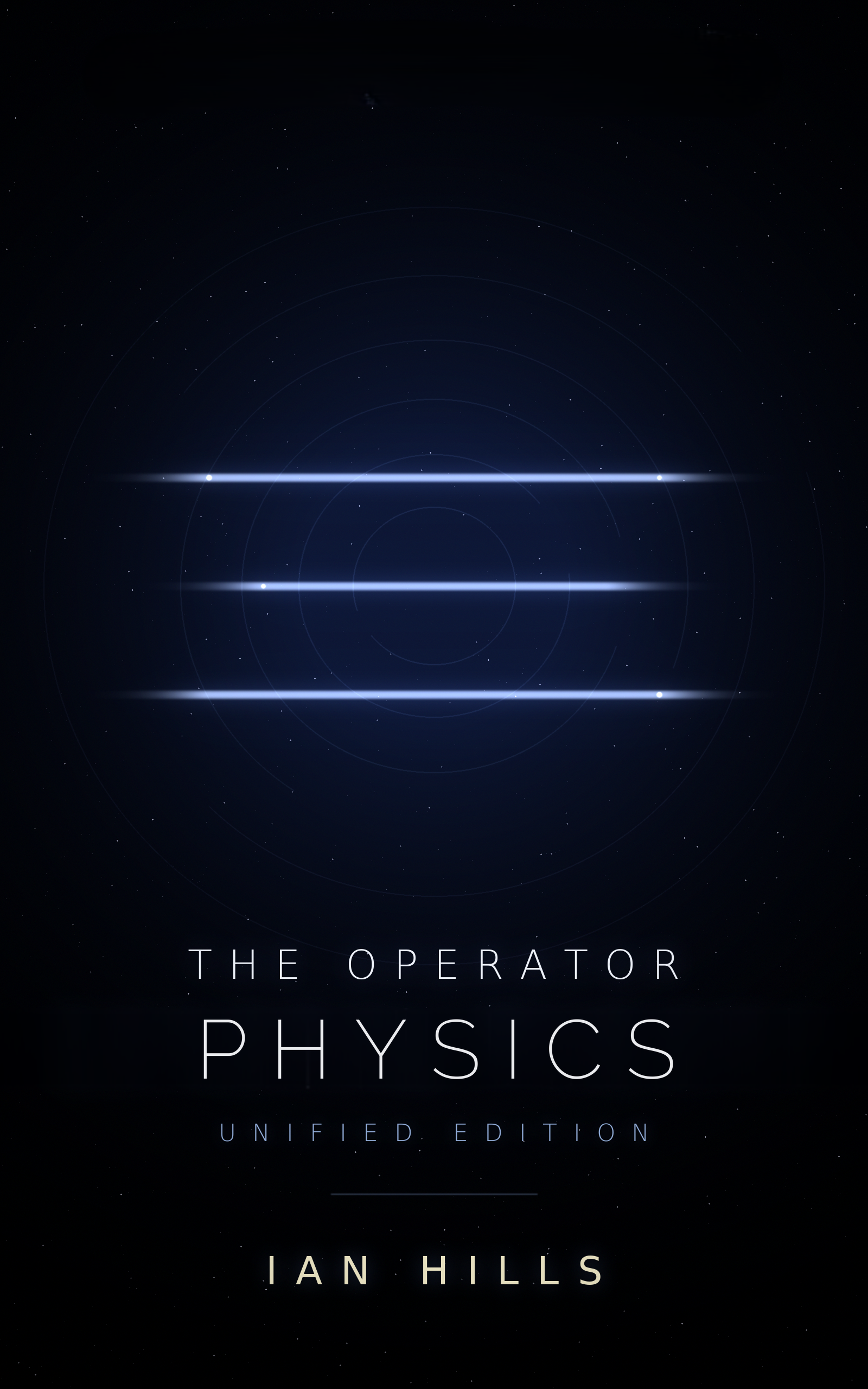
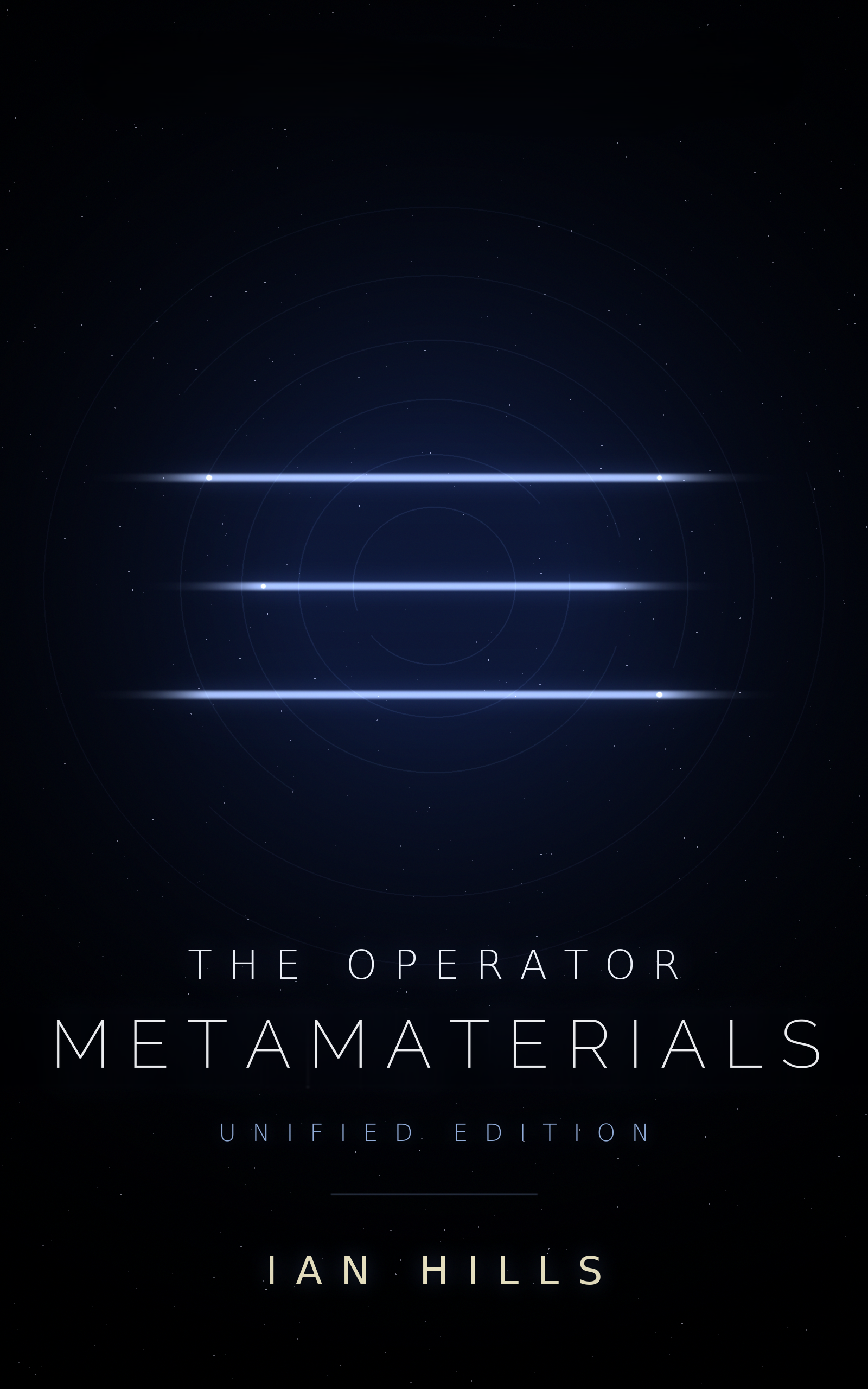
Companion Volumes
Alongside the novels, four canonical works set out the physics and structure of the universe they inhabit.
Operator Physics The cross scale guide to the canon. A tour of matter, time and light side by side, showing how the two theories meet in astrophysics, how cosmology is imported by both, and how one shared identity orders bodies across many scales.
The Operator Unified Theory. Across Volumes the Operator Unified Theory develops its own geometry, counting rules, dynamical identities, chemistry mechanics, and cross‑scale operators. Every claim carries a provenance tag; every derivation is recorded; every boundary is respected. This is a parallel canonical track: independent, internally consistent, and fully audited.
The Operator Papers collects the works that establish this architecture. Volume I develops the boundary, conserved count, and circulation that generate the structure of matter.
Metamaterials The harmonic engineering companion. A technical account of lattice tuned structures, apertures and continuum responsive materials behind gates, ships and Operator craft.
These volumes are not required to read the novels. They exist for readers who want to understand the universe the characters are walking through, and the physics that makes their civilisation possible.
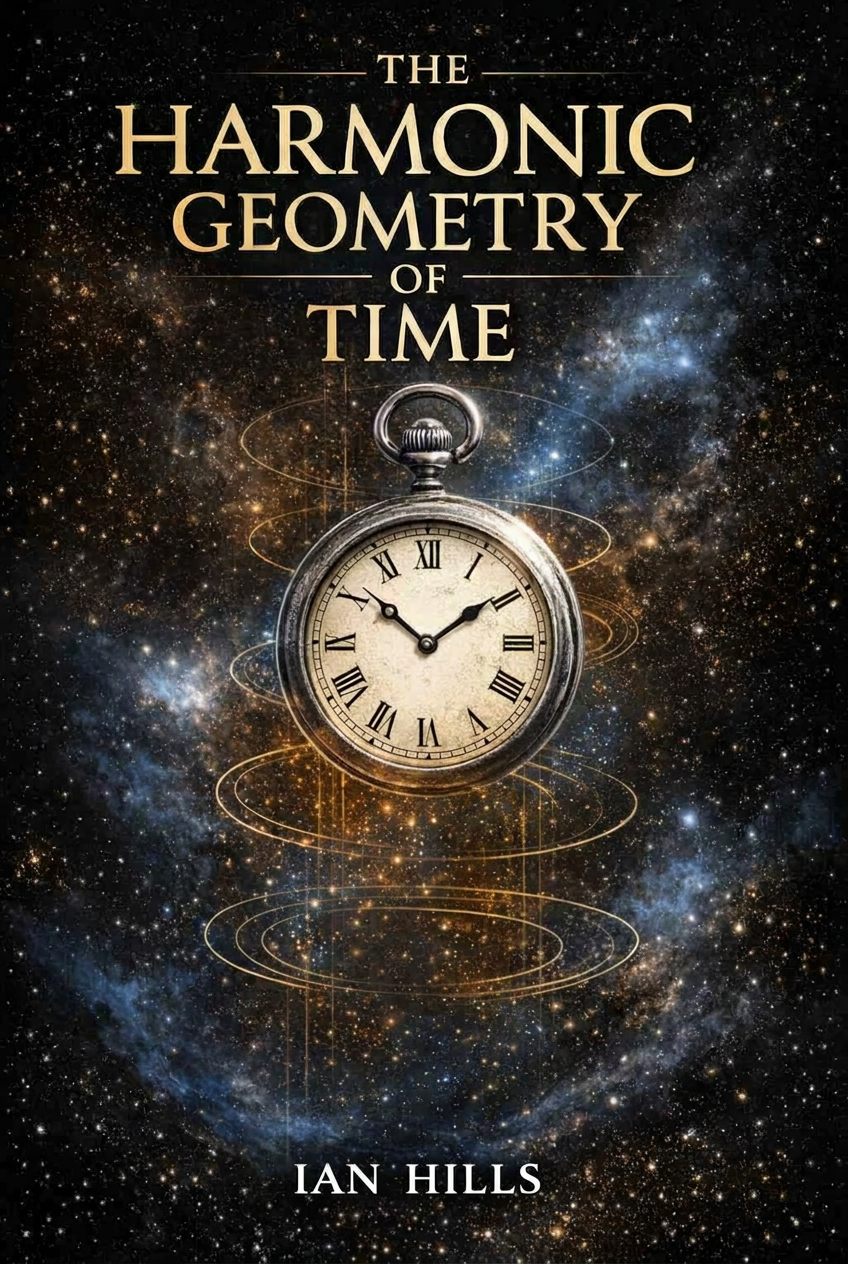
HARMONIC GEOMETRY SERIES
OTHER OPERATOR Q SERIES
DECOMPRESSED SERIES

PHYSICS REVEALED SERIES

HUMANITY REVEALED SERIES